The short version
- Cut first, dig second: remove the branches, leaving a 12" stump as a handle.
- Dig a trench around the root ball and sever big roots with a mattock or root saw.
- Pull the stump with a brush grubber chain and a truck (hitch only - never the bumper), or lever it out with a long digging bar.
- Late winter, before spring growth, is the easiest time to remove evergreen shrubs.
- Budget about an hour per large shrub. Don't want to replant? Cut the stump flush and let it rot.
Disclosure: this post may mention products we used. See our disclosure for details.
Spring is right around the corner, and the warmer weather makes it hard for me to work inside. I want to spend all my time outside, planting flowers and fixing up the porch. But before any of that could happen, we had to deal with the front flower bed - more specifically, the overgrown shrubs planted along the front of the house.
These things were about six feet tall and almost as wide. They were so close together you couldn't tell where one ended and the next began. From what we could see, we had three varieties - boxwoods, holly bushes and some other evergreen shrub - and they were all massive. Some trunks were as thick as my arm.
Why we removed the shrubs (and when)
Evergreen shrubs don't go fully dormant the way perennials do, but their growth slows way down in winter. We knew that if we were going to remove them, we needed to do it before spring, before they took off again - and before we wanted the bed for new plants.
We also knew the job would be tough, and we didn't have the budget to pay a landscaping company. Not with everything else going on in the house. We managed to remove most of the shrubs in one weekend, which isn't bad considering how big they were.
Call 811 before you dig. It's free, and it's the law in most states. Utility lines often run right through front flower beds.
Shrub removal tools you'll need
- Long-handled pruning shears / loppers
- Pruning saw for trunks over 2"
- Pointed shovel (digging is 10× easier)
- Mattock for chopping roots
- Brush grubber or a heavy chain
- 4WD truck or sturdy vehicle with a hitch (optional)
- Digging bar for leverage
- Gloves, eye protection and long sleeves (hollies bite)
Step 1: Cut off all the branches
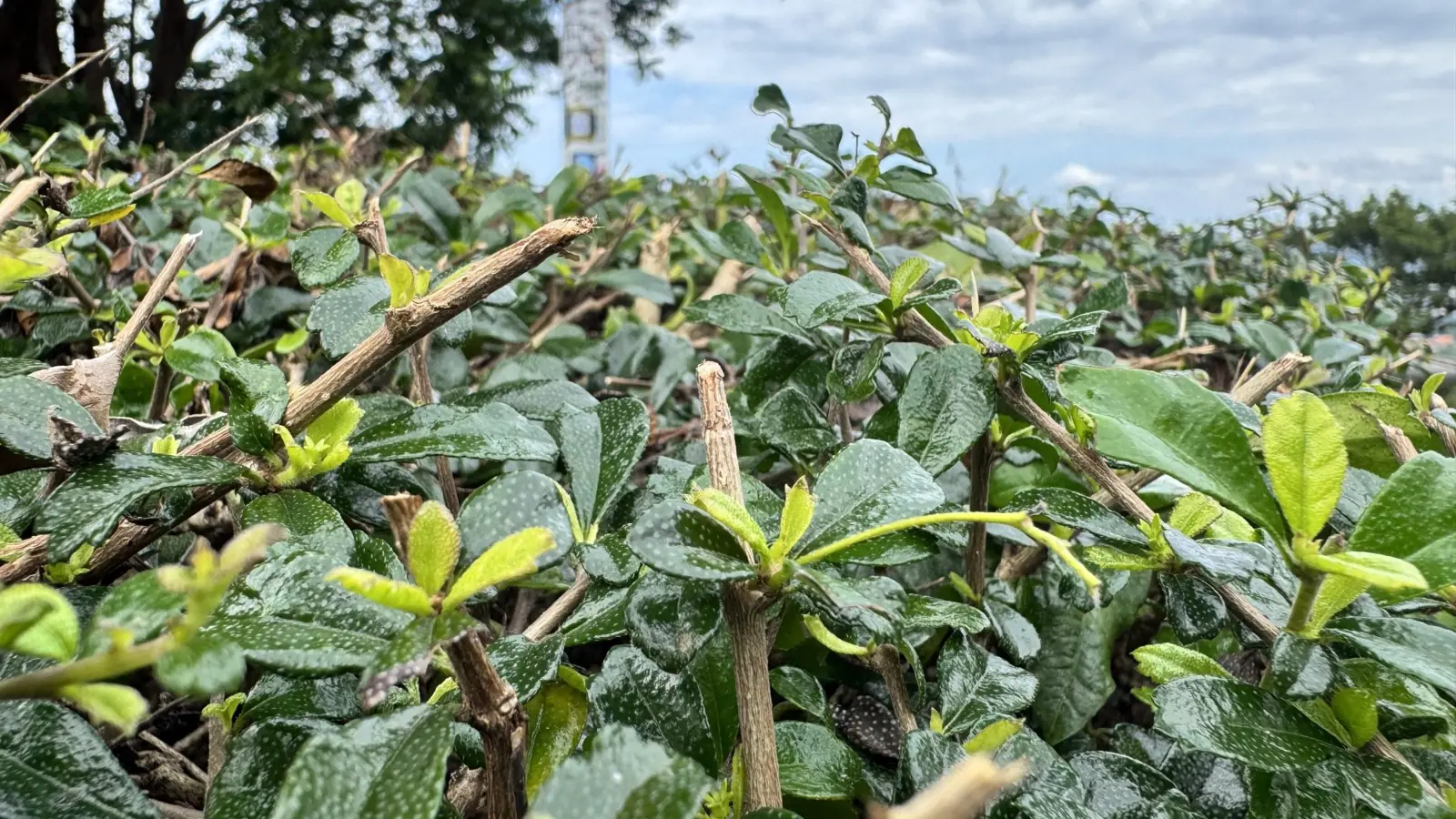
The first thing we did was cut every branch off each shrub. Ours were 1-3 inches in diameter, which kept the cutting manageable with long-handled loppers. Starting at the back and trimming toward the front worked best: plants grow toward the sun, so the side closest to the house had barely any leaves and was easy to reach once the front was out of the way.
I'd cut about ten branches in one area, then pull them away from the stump to make room for the next cuts. The branches were tangled together in places, which made it tricky at times - take it slow.
Leave about a 12-inch stump. It gives you a handle to rock and pull the root ball later. If you don't plan to plant anything in that spot, you can cut the stump right to the ground instead. Clip off any sprouts that come up, and the stump will eventually rot away.
Step 2: Dig around the base and loosen the roots
We did plan to plant there, so the roots had to go. Some of them ran close to the foundation and front porch, and we didn't want to start ripping them out blindly. Instead, we dug around them, broke up the roots, then pulled.
- Trench around the stump. Push the shovel in about 12 inches from the trunk all the way around, lifting the handle on each push to loosen the roots.
- Chop the big roots. Some of ours were nearly an inch thick. A mattock chops through them in a couple of swings.
- Rock the stump. Push the stump back and forth. If it moves, you're close. If it doesn't, find the root that's anchoring it and cut it.
How to remove bushes with deep roots: soak the ground with a hose the day before. Dry, compacted clay grips roots like concrete; moist soil lets them slide out.
Step 3: Pull the stumps with a brush grubber
Once most of the exposed roots were loose, it was time to get them out of the ground. We wrapped a brush grubber around the trunk several times - the section of chain with the "teeth" goes around the stump so it can't slip off - and hooked the other end to a four-wheel-drive pickup.
A friend helped with this part. He eased the truck forward and we watched the stumps pop up. Some weren't as easy as others; for those we chopped a few more roots and tried again.
Hook the chain to a hitch only - never the bumper. Pull slowly and keep everyone well clear of the chain. If you don't have a truck, any sturdy vehicle with a tow hitch works for small and medium shrubs, or use a long digging bar as a lever.
Step 4: Fill the holes and level the bed
With the roots out, we filled the holes with soil and leveled the flower bed. We didn't worry about prepping for planting right away - North Carolina weather is very "wishy-washy," and it's usually mid-April before we get busy with planting. When you're ready, the calculator below tells you how much soil or mulch to buy for your new bed.
Mulch & Soil Calculator
Bulk is usually cheaper above about 2 cubic yards. Keep mulch a few inches away from foundations and plant stems.
How long does it take to remove shrubs?
Removing these overgrown shrubs was time-intensive. We spent about one hour per shrub, sometimes a little more. Here's a rough guide:
| Shrub size | Typical time | Best method |
|---|---|---|
| Small (under 3 ft) | 15-30 min | Shovel and hand-pull |
| Medium (3-5 ft) | 30-60 min | Shovel, mattock, digging bar |
| Large (5 ft+) | 1-2 hours | Brush grubber and vehicle |
| Huge or tree-like | Varies | Cut flush and grind, or call a pro |
Our holly bushes were simply too big to pull. Rather than break our backs, we left their stumps as "garden art" and planted around them.
Don't toss the boxwood clippings
Instead of throwing all the boxwood cuttings away, I made a fresh wreath for our front door. It took 20 minutes and cost nothing - here's how to make a DIY boxwood wreath.
What to plant in front of your house next
Pulling out old foundation shrubs is the perfect chance to plant something that won't outgrow the space in five years. Think dwarf varieties, mixed heights and a bed that's at least 4-5 feet deep. I put together a list of the best shrubs for the front of a house (including how far to plant boxwoods from the foundation), and if you have red clay like us, read our beginner tips for planting in red clay soil first.
We'd love to hear about your landscaping adventures. Have you given your front yard a complete overhaul? What did you remove, and what did you plant in its place?
Frequently asked questions
What is the easiest way to remove bushes?
Cut the bush down to a 12-inch stump, dig a circle around it about a foot out from the trunk, chop through the exposed roots with a mattock, then rock and pull the stump out - by hand for small shrubs, with a brush grubber chain and vehicle for big ones.
How do you remove bushes with deep roots?
Expose the roots rather than yanking. Dig deeper around the root ball, cut each thick root with a mattock, loppers or reciprocating saw with a pruning blade, and lever the stump with a digging bar. Water the ground the day before - moist soil releases roots far more easily than dry clay.
How do you get rid of bush stumps without digging?
Cut the stump as close to the ground as possible and either let it rot (clip off any sprouts as they appear), drill holes and add a stump-removal product, or rent a stump grinder for larger stumps. These methods take longer or cost more but save your back.
Is it safe to remove shrubs near the foundation?
Yes, with care. Dig and cut roots instead of ripping them out so you don't disturb the soil against the foundation, call 811 to locate utilities first, and backfill holes with soil so water drains away from the house.
When is the best time to remove shrubs?
Late winter or early spring before new growth, or in fall. Evergreens slow down in winter, the soil is usually moist, and you'll have a clean bed ready for spring planting.
Do I need to remove the roots of a bush?
Only if you want to plant in the same spot. If not, cut the stump flush with the ground; most shrub roots will rot away in a year or two.